
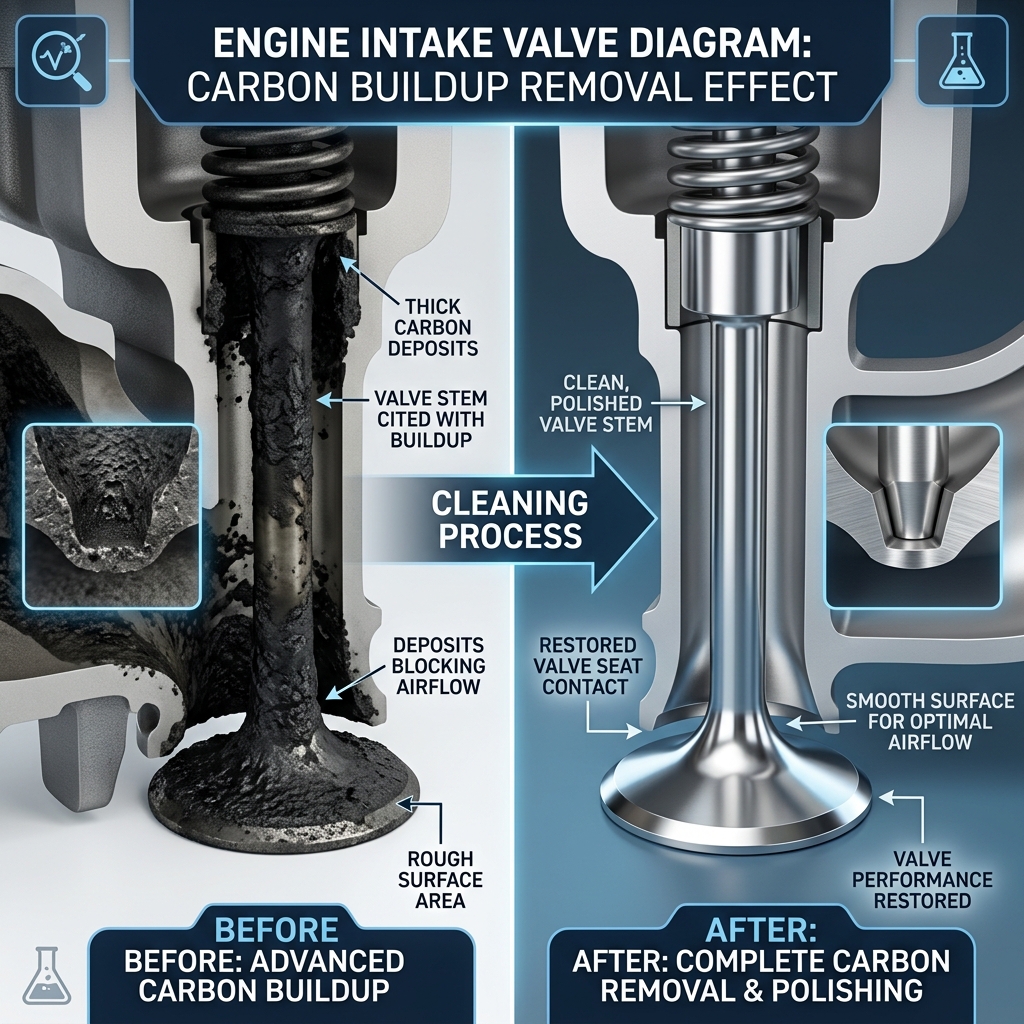
If you drive a modern car, chances are it is powered by a Gasoline Direct Injection (GDI) engine. While GDI technology provides excellent fuel economy and power, it harbors a design flaw that can kill your engine's efficiency over time: intake valve carbon buildup.
Why Do GDI Engines Build Up Carbon?
In older Multi-Port Injection (MPI) engines, fuel was sprayed onto the back of the intake valves. The gasoline acted as a constant solvent, washing away oil vapor and carbon residue.
In a GDI engine, fuel is sprayed directly into the combustion chamber. Because no fuel passes over the intake valves, oil vapor from the Positive Crankcase Ventilation (PCV) system bakes onto the hot intake valves, forming rock-hard carbon crusts.
Symptoms of Valve Carbon Buildup:
- Loss of power and sluggish throttle response
- Rough idling and engine stumbles during cold starts
- Increased fuel consumption and engine misfires
- Persistent check engine light (often cylinder misfire codes)
How Extreme Auto Pros Cleans GDI Valves
Standard fuel additives poured into the gas tank will never touch GDI intake valves. The only way to clean them is manually or via specialized media blasting.
The Walnut Blasting Method (Gold Standard)
At our Parma Heights facility, we use high-pressure walnut shell blasting to restore GDI valves. We remove the intake manifold and blast finely crushed walnut shells onto the closed intake valves. The shells are hard enough to pulverize the carbon deposits, but soft enough to cause zero damage to the metal valves.
Book a GDI Intake Valve Audit
Is your car feeling sluggish or misfiring? Bring it to Extreme Auto Pros at 6376 Pearl Rd, Parma Heights, OH. Call us at (216) 739-9400 to consult our diagnostic specialists.